Computational modelling of cerebral blood flow and autoregulation during ischaemic stroke and reperfusion
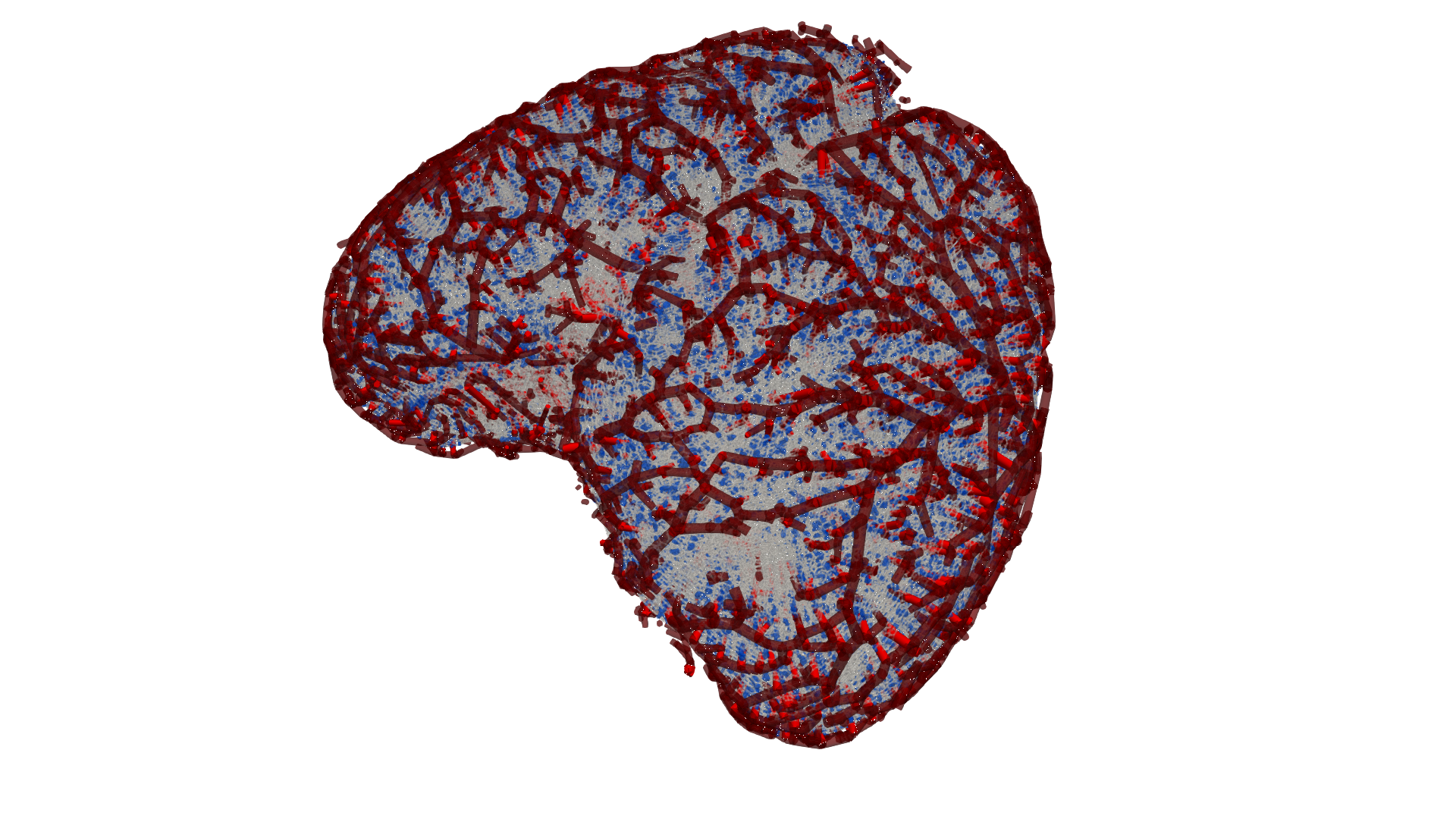
Ischaemic stroke, caused by the occlusion of a major cerebral artery, disrupts brain function and damages the cerebral microvasculature. To investigate these processes, we develop computational models of cerebral blood flow that combine realistic vascular network topology with in vivo experimental data, creating a strong link between simulations and experiments. By incorporating cerebral autoregulatory mechanisms, we quantify how vessel-level mechanisms control blood flow redistribution and influence stroke outcome. Our in silico framework provides mechanistic insight into stroke-related perfusion variability and supports the development of new therapeutic strategies. Recently, we generated semi-realistic whole-brain vascular networks to enable large-scale simulations across different brain regions.
Collaboration with: PD Dr. Franca Schmid, University of Bern